5 Tips Cavitation vs Ultrasound Fat Loss Which Works Best?

Time:2026-10-01 Author:Henry
0%

Choosing between cavitation and ultrasound fat loss can feel confusing. Both use sound energy, yet they may describe different technologies, settings, and treatment goals. That raises the practical question: what is the difference between cavitation and ultrasound fat loss?

Cavitation often refers to low-frequency ultrasound used for localized body contouring. Ultrasound fat loss may describe a broader category, including focused or non-focused ultrasound devices. Results depend on the device, treatment area, tissue thickness, and the provider’s training. They are not substitutes for nutrition, exercise, or medical weight-loss care. They also do not promise permanent fat reduction.

Dr. Michael H. Gold, a board-certified dermatologist and cosmetic-procedure researcher, has emphasized, “There is no substitute for a careful consultation and realistic expectations.” That warning matters. A polished clinic room does not guarantee a meaningful result. Ask to see the device name, regulatory clearance, contraindications, and typical outcomes. Ask what happens if the first session changes nothing. Good questions can prevent expensive disappointment.

This guide explores five practical tips. It compares treatment mechanisms, comfort, session planning, evidence quality, and safety considerations. Some marketing claims sound stronger than the research supports. That deserves honest reflection. I may simplify a complex field, because device settings and clinical studies vary widely. Still, the central lesson remains useful: choose the technology after understanding your body, your goals, and the evidence behind the specific device. A qualified healthcare professional should assess whether treatment is appropriate for you.
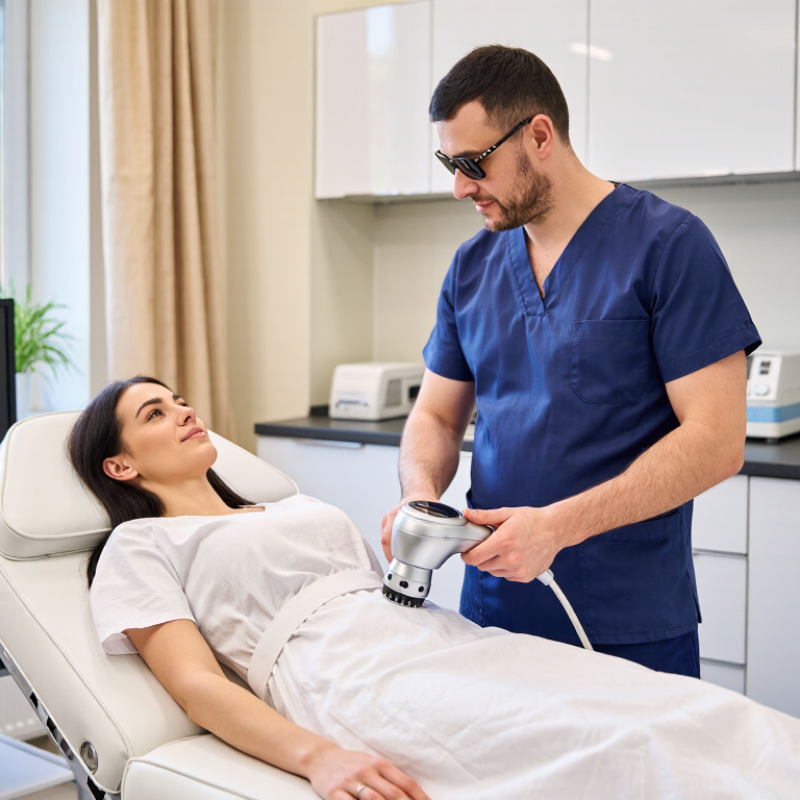
5 Tips Cavitation vs Ultrasound Fat Loss Which Works Best?

Define Cavitation and Ultrasound Fat Loss by Frequency, Depth, and Mechanism

Cavitation and ultrasound fat loss are related, but they are not identical treatments. Cavitation usually refers to low-frequency ultrasound, often around 30–70 kHz in aesthetic devices. Its pressure changes may create bubbles in fatty tissue, stressing cell membranes. Treatment depth is often shallow, commonly within a few centimeters, but it varies by applicator and tissue thickness. Frequency matters. Lower frequencies generally penetrate differently and produce stronger mechanical effects.

“Ultrasound fat loss” is a wider term. It can include focused ultrasound, commonly operating in the hundreds of kilohertz to megahertz range. Focused energy targets a defined depth, such as 1.3 or 1.6 centimeters, while leaving surrounding tissue relatively protected.

The mechanism may involve thermal coagulation, mechanical disruption, or both. A 2022 review in Lasers in Medical Science reported modest, localized circumference reductions, but protocols differed widely. That limits direct comparisons.

Check five details before choosing:

frequency target depth energy delivery evidence operator training.

The U.S. FDA describes non-invasive body contouring as a shape-changing procedure, not a weight-loss method. The American Society of Plastic Surgeons’ 2023 statistics also show continued demand for non-surgical contouring, yet popularity is not proof of superior results. Clinical experience suggests results depend heavily on fat thickness, treatment settings, and measurement methods. Some reports sound too confident. A consultation should discuss realistic changes, temporary swelling, skin sensitivity, and the possibility of limited improvement.

Compare FDA Guidance: Body Contouring Is Not a Weight-Loss Treatment

Cavitation and ultrasound fat-loss treatments are often presented as different choices. In practice, cavitation is a form of therapeutic ultrasound. Focused ultrasound uses concentrated energy, while broader ultrasound may target a smaller fat layer. Results depend on the device, treatment area, and patient.

The FDA states that non-invasive body contouring is not a treatment for obesity or weight loss. It may temporarily reduce a small area’s circumference or alter fat cells. It does not replace nutrition, exercise, or medical weight management. The FDA also warns that cleared devices have specific indications, so advertising claims deserve careful checking. Ask for the device’s clearance and treatment purpose.

Industry demand is visible, but demand is not proof of weight reduction. The American Society of Plastic Surgeons’ 2023 Plastic Surgery Statistics Report recorded 358,555 noninvasive fat-reduction procedures in the United States. That figure counts procedures, not kilograms lost or long-term health outcomes.

Peer-reviewed ultrasound studies commonly report localized circumference changes, often measured in centimeters, rather than meaningful body-weight loss. The difference matters.

A practical consultation should document waist measurements, skin condition, medical history, and realistic goals. Results can be uneven. Some people notice little change. Mild tenderness, swelling, or temporary redness may occur, depending on the technology. I would treat before-and-after photos cautiously; lighting and posture can exaggerate improvement. The honest question is not “Which method burns more fat?” It is “Is this limited contour change worth the cost and uncertainty?”

Assess Clinical Outcomes Using Circumference, Fat Thickness, and Follow-Up Data

Cavitation and therapeutic ultrasound are often grouped together, but their clinical effects may differ. Neither should be judged by appearance alone. A qualified practitioner should record baseline circumference at fixed landmarks, such as the waist or thigh. Use the same tape tension each time. Small technique changes can alter results.

Tip 1: Measure fat thickness with diagnostic ultrasound, not only a measuring tape. Record several points and use consistent pressure.

Tip 2: Photograph the area under identical lighting and posture. This reduces misleading visual changes.

Tip 3: Ask about treatment settings, session intervals, and expected biological effects. “Ultrasound” is not one standardized treatment.

Follow-up data matters more than a single dramatic reading. Recheck circumference after several weeks, commonly around four to twelve weeks, because swelling can temporarily distort measurements.

Tip 4: Compare the same body site, device method, and measurement conditions.

Tip 5: Track discomfort, skin changes, and functional concerns alongside size changes. Fat thickness may decrease without a meaningful circumference reduction, and the reverse can also occur. Results may be modest. That is normal.

A clinical record should note weight stability, diet changes, exercise, and other procedures. These factors can influence outcomes. I would be cautious about claims based on small samples or immediate post-treatment photos. Even well-collected measurements have limits, and treatment response varies between individuals.

Review Safety Data: Pain, Burns, Bruising, and Contraindication Risks

Cavitation and therapeutic ultrasound are often grouped together, but their energy patterns and safety profiles can differ. Cavitation treatments use acoustic energy near the skin to target fat cells. Some ultrasound procedures use focused energy and create deeper heat. Neither approach is a weight-loss treatment. That distinction matters. The better option depends on the device, treatment area, and medical screening, not advertising claims.

Pain is usually mild, yet comfort varies with settings, tissue thickness, and personal sensitivity. Patients may notice warmth, tingling, pressure, or brief tenderness afterward. Incorrect contact, excessive energy, or repeated passes can increase burn risk, although serious burns are uncommon. Bruising can occur, especially with fragile skin, recent sun exposure, or medicines that affect clotting. A red mark is not always harmless. Persistent pain, blistering, swelling, numbness, or skin-color changes need prompt medical assessment.

Safety screening should cover pregnancy, active infection, open wounds, reduced sensation, implanted electronic devices, and significant liver or kidney disease. People with bleeding disorders or anticoagulant use may need individualized advice. A qualified provider should explain the device, record medical history, obtain informed consent, and test a small area first. Ask how adverse events are documented. Evidence remains uneven across devices and treatment protocols. I would not treat “noninvasive” as “risk-free”; that phrase can hide practical uncertainty.

5 Tips: Cavitation vs Ultrasound Fat Loss — Which Works Best?

This chart compares documented safety domains rather than treatment effectiveness or adverse-event rates. A score of 1 means the risk is recognized in clinical safety guidance or published literature; it does not indicate the probability of occurrence.

1. Pain and tenderness

Temporary tenderness, discomfort, or altered sensation can occur with both approaches.

2. Burns

Heating-based focused ultrasound carries a clearer thermal-injury concern; incorrect settings or poor coupling can increase risk.

3. Bruising and swelling

Temporary bruising, redness, swelling, or firmness may occur, especially after higher-energy treatment.

4. Contraindications

Pregnancy, open or infected skin, impaired sensation, and some implanted electronic or metallic devices require medical review or avoidance.

Safety information is based on general medical-device safety guidance and published reviews of non-invasive body-contouring ultrasound. Risk depends on the device, energy settings, treatment area, operator training, and patient health. This chart is not a substitute for individualized medical advice.

Choose the Best Option by Evidence Quality, Cost, Goals, and Treatment Time

Cavitation and ultrasound fat loss are often described as competing treatments, but the terms can overlap. Cavitation usually refers to low-frequency ultrasound applied to localized fat. Other ultrasound methods use different frequencies, depths, and energy levels. Ask for the exact technology, not just the treatment name. Evidence remains mixed. Small studies often report modest contour changes, while long-term data are limited. A qualified clinician should explain outcomes using peer-reviewed research and realistic photographs.

Your goal matters more than the advertisement. For a small area, such as a lower abdomen, cavitation may suit someone avoiding needles and surgery. It is not a weight-loss treatment. Lifestyle changes still influence the result. Ultrasound may be considered when tissue depth or treatment precision matters, but settings must match your anatomy. Ask about skin sensitivity, burns, discomfort, and who manages complications. Do not skip a medical assessment.

Cost and time can change the decision. A cheaper session may require six visits, travel, and maintenance. A more expensive plan may use fewer appointments, but higher price does not prove better results. Ask for the total cost in writing. Treatment time can range from roughly 30 to 60 minutes, depending on the area. Results may develop gradually over several weeks. Some claims sound too certain. That is a warning sign. I would compare independent evidence, provider training, and measurable goals before choosing either option. Photograph the same area under similar lighting. Even then, the comparison is imperfect.

5 Tips: Cavitation vs Ultrasound Fat Loss — Which Works Best? Choose the Best Option by Evidence Quality, Cost, Goals, and Treatment Time

Decision Factor Cavitation-Based Ultrasound Therapeutic Ultrasound Fat Reduction Practical Takeaway
1. Evidence quality Low to moderate, depending on the device and protocol. Published studies are often small, use different treatment settings, and commonly measure circumference rather than long-term fat loss. Moderate for selected, regulated medical procedures, but results remain localized and device-specific. Evidence does not support using ultrasound as a general weight-loss treatment. Choose the option with a clearly identified medical device, published clinical data, qualified supervision, and realistic claims. Neither option should replace diet, exercise, or obesity treatment.
2. Main goal Noninvasive body contouring for small, localized areas such as the abdomen, flanks, thighs, or hips. Localized reduction of subcutaneous fat or improvement in body contour, usually after weight has remained relatively stable. Both are more appropriate for contour refinement than for overall weight loss or treatment of obesity.
3. Expected result Results are variable. Some studies report modest reductions in local circumference after multiple sessions, but part of the early change may reflect temporary fluid shifts. A gradual, localized contour change may develop over several weeks as the body clears or remodels treated tissue. The amount of change varies by anatomy, device, and patient. Do not judge success by scale weight alone. Use standardized photographs, measurements, and a follow-up period of at least several weeks.
4. Typical treatment time Approximately 30–60 minutes per session, depending on the body area and treatment protocol. Approximately 30–90 minutes per session, depending on the treated area, applicator, and clinical protocol. Ask whether consultation, preparation, measurements, and post-treatment observation are included in the quoted appointment time.
5. Number of sessions Commonly offered as a series of approximately 4–8 sessions, often spaced about 1–2 weeks apart; the exact schedule is protocol-dependent. May require one or several sessions, depending on the device, treatment area, and desired correction. A qualified provider should define the protocol. Compare the full course cost rather than the price of one appointment.
Comfort and downtime Usually associated with warmth, vibration, or mild discomfort. Temporary redness, tenderness, swelling, or bruising may occur. Most protocols involve little or no downtime. Sensations may include heat, pressure, tingling, or discomfort. Temporary swelling, redness, tenderness, numbness, or bruising are possible; downtime depends on the technology used. A lower-downtime option may be convenient, but less downtime does not necessarily mean a stronger or more predictable result.
Safety considerations Avoid treatment over open wounds, active skin infection, areas with impaired sensation, or certain implanted electronic or metallic devices unless cleared by a clinician. Screening is important for pregnancy, significant liver or kidney disease, active infection, hernia near the treatment site, implanted devices, and conditions affecting sensation or healing. Medical history, medications, pregnancy status, implants, and the exact device should be reviewed before treatment.
Typical cost range Approximately USD $100–$500 per session in many markets; a full course may cost about USD $400–$3,000. Approximately USD $500–$2,500 per session in many markets; total cost varies substantially by treatment area and medical setting. These are broad, non-brand estimates and are not standardized prices. Ask for an itemized total including consultation and follow-up.
Best fit Someone seeking a lower-cost, noninvasive contouring series and willing to accept less predictable evidence and gradual results. Someone prioritizing a medically supervised procedure with a defined treatment target and potentially fewer sessions, while accepting higher cost. The “best” option depends on the treatment goal, anatomy, budget, tolerance for uncertainty, and provider qualifications.
Bottom line May provide modest localized contour changes, but study quality and outcomes are inconsistent across devices and clinics. May offer more structured medical treatment, but it is still not a substitute for comprehensive weight management and outcomes are not guaranteed. For evidence quality and safety, prioritize a qualified clinician, transparent device information, realistic expectations, and documented follow-up over promotional claims.
Evidence note: Noninvasive ultrasound procedures are generally intended for localized body contouring, not clinically significant weight loss. Reported outcomes vary because studies use different ultrasound frequencies, energy settings, treatment intervals, body areas, and measurement methods. Cost and treatment time are approximate ranges and vary by country, provider, treatment area, and clinical protocol.

FAQS

What is the difference between cavitation and ultrasound fat loss?

Cavitation usually uses low-frequency ultrasound, often around 30–70 kHz. Ultrasound fat loss is a broader term. It may include focused energy at higher frequencies.

How does cavitation affect fatty tissue?

Pressure changes may create tiny bubbles in fatty tissue. These bubbles can stress cell membranes. The effect is usually shallow and device-dependent.

How deep can ultrasound treatments reach?

Cavitation often works within a few centimeters. Focused ultrasound may target depths such as 1.3 or 1.6 centimeters. Depth varies with the applicator and tissue thickness.

Can these treatments cause weight loss?

No. They are body-contouring procedures, not weight-loss methods. They may produce modest, localized circumference changes. Results can be limited.

How should treatment results be measured?

Record circumference at fixed landmarks, such as the waist or thigh. Use consistent tape tension, lighting, posture, and body position. Small changes matter.

When should results be checked?

Follow-up commonly occurs after four to twelve weeks. Early swelling can distort measurements. One dramatic photo proves very little.

What safety problems can occur?

Temporary warmth, tingling, pressure, tenderness, redness, and bruising may occur. Incorrect contact or excessive energy can increase burn risk. Serious burns are uncommon.

Who should receive careful safety screening?

Screening should consider pregnancy, infection, open wounds, reduced sensation, and implanted electronic devices. Bleeding disorders and anticoagulant use also require individualized advice.

What questions should be asked before treatment?

Ask about frequency, target depth, energy settings, session intervals, evidence, and operator training. Confirm how complications are documented. “Noninvasive” does not mean risk-free.

Why can results differ between people?

Fat thickness, settings, measurement methods, diet, exercise, and weight changes can influence outcomes. Some claims sound too confident. Improvement may be modest.

Conclusion

Cavitation and ultrasound fat loss are noninvasive body-contouring approaches, but they may differ in operating frequency, tissue depth, and biological mechanism. If you are asking, “what is the difference between cavitation and ultrasound fat loss,” the answer depends on the device and treatment settings: cavitation generally aims to affect fat cells through low-frequency acoustic energy, while ultrasound fat loss may use different frequencies to target tissue at varying depths. Neither method should be presented as a replacement for weight reduction, and regulatory guidance emphasizes that body contouring is intended for localized appearance changes rather than treating obesity.

The most useful comparison should focus on measurable outcomes, including changes in circumference, fat thickness, and results at follow-up visits. Safety is equally important, with possible concerns such as temporary pain, bruising, burns, or risks for people with certain medical conditions or implanted devices. The best choice depends on evidence quality, treatment cost, personal goals, session length, and consultation with a qualified healthcare professional.

Henry

Henry

Henry is a dedicated marketing professional with a profound expertise in the company's offerings. With years of experience in the industry, he possesses an impressive understanding of the market dynamics and consumer behaviors that drive success. Henry is committed to sharing his insights through......