How to Choose the Right Aesthetic Machine for a New Medspa?

Time:2026-10-11 Author:Ethan
0%

Choosing equipment is one of the most consequential decisions for a new medspa. The right platform must fit your clinical goals, budget, staff skills, and local patient demand. It also needs dependable training, maintenance, and manufacturer support. A dramatic feature list does not guarantee a sustainable business.

When considering how to choose the right aesthetic machine for a new medspa, look beyond launch-day excitement. Dr. Grant Stevens, a respected aesthetic physician and medspa industry leader, emphasizes this principle: “Technology should serve the patient, not the other way around.” Your treatment room makes this idea practical. A laser may look impressive in a brochure, yet it could remain unused if your team lacks confidence or your clients prefer simpler services. Start with real questions. Which concerns do nearby patients discuss? How many treatments can your staff safely perform each week? Can the machine deliver consistent results across different skin types?

The numbers also deserve close attention. Calculate purchase costs, consumables, training, warranties, servicing, and realistic treatment volume. Ask for clinical evidence, not only before-and-after images. Request a live demonstration and speak with current owners. Their experience may reveal delays, hidden expenses, or difficult workflows. No buying formula is perfect. Patient demand can change. Technology can become outdated. Still, careful evaluation reduces avoidable mistakes and supports safer, more credible growth. A suitable machine should strengthen patient trust, team capability, and long-term clinical value—not simply make your medspa look more advanced.
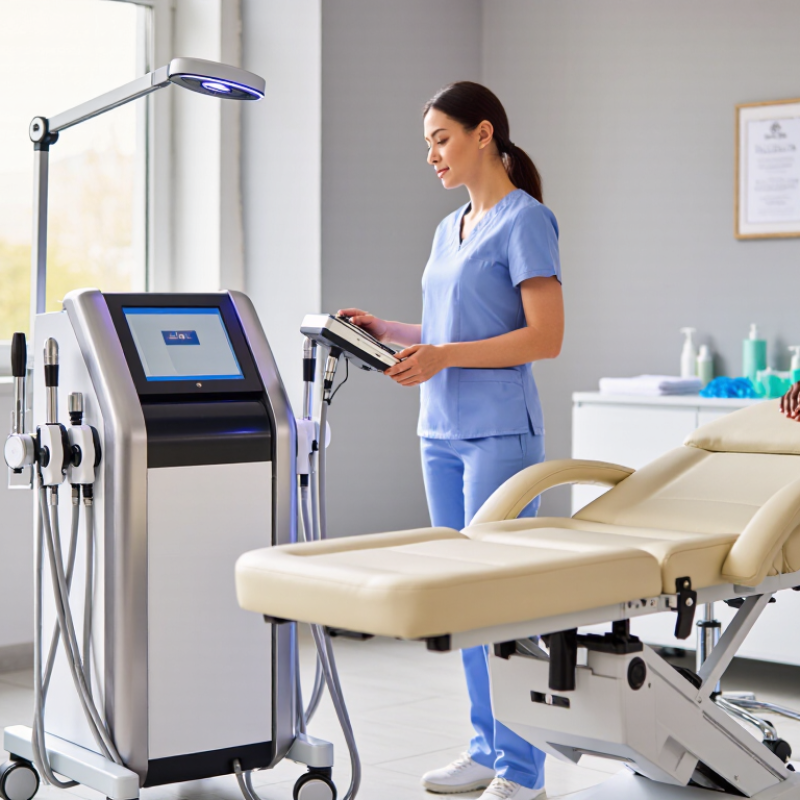
How to Choose the Right Aesthetic Machine for a New Medspa?

Define the Medspa’s Goals, Services, and Target Clients

Choosing an aesthetic machine should begin with the medspa’s purpose, not a supplier’s impressive brochure.

Define the services you want to offer during the next twelve months. Will your clinic focus on skin texture, hair reduction, body contouring, or several treatments? Each goal requires different technology, treatment times, and staff skills.

Know your target clients in practical detail. Consider their age, concerns, budgets, and preferred appointment times. A busy professional may value short sessions, while a client seeking gradual skin improvement may prefer a treatment plan with several visits. Review local demand, but do not rely only on trends. Speak with existing clients and record repeated requests.

Tips:

  • Write three core services.
  • Estimate monthly demand.
  • Check treatment duration.
  • Ask about training.
  • Confirm maintenance costs. Keep safety documentation accessible.

A suitable machine should fit your clinical workflow and team experience. Evaluate operating instructions, adjustable settings, client screening needs, and required protective equipment. Ask qualified practitioners to review the technology before purchase. Training should include hands-on practice and clear procedures for managing expected reactions. Regulatory requirements also vary by location, so verify them with the appropriate authorities.

Be realistic about financial performance.

A premium feature may sound useful but remain unused. The first equipment plan may be incomplete. Reassess it after reviewing consultations, cancellations, treatment outcomes, and staff feedback. Reliable records often reveal more than confident sales claims.

Match Aesthetic Technologies to Treatment Indications

Choosing an aesthetic machine begins with treatment indications, not attractive specifications. The 2023 ISAPS Global Survey recorded approximately 19.5 million nonsurgical aesthetic procedures worldwide. Demand is broad, but patient needs remain specific. A new medspa should map each target concern before reviewing equipment.

For unwanted hair, compare wavelength, cooling, skin-type compatibility, and treatment speed. For vascular or pigment concerns, assess the device’s documented targets and safety settings. Fractional resurfacing suits selected texture and scar indications, while focused energy may address body contouring goals. The American Society of Plastic Surgeons reported about 9.5 million botulinum toxin procedures and 5.5 million soft-tissue filler procedures in 2023. Machines should support the surrounding consultation pathway, not replace it.

Clinical assessment comes first. Review skin type, medical history, medications, contraindications, and realistic outcomes. Ask whether the technology has training, maintenance, and evidence for the indications you will actually treat. A device with impressive power may be unsuitable for your patient mix. That mistake is expensive. No spreadsheet predicts every patient response, either. Build a small treatment portfolio, monitor outcomes, and revise purchasing decisions after supervised use. Use only equipment cleared or approved for its intended indications under applicable local requirements.

How to Choose the Right Aesthetic Machine for a New Medspa? — Match Aesthetic Technologies to Treatment Indications

A practical comparison of common aesthetic technologies by treatment indication, patient profile, operational requirements, and safety considerations.

Technology Category Primary Treatment Indications Core Mechanism Best-Fit Patient Profile Typical Downtime Key Contraindications or Precautions Operational Requirements Relative Safety Profile Selection Notes for a New Medspa
Intense Pulsed Light (IPL) Photodamage Freckles Diffuse redness Hair reduction Broad-spectrum non-coherent light is absorbed by melanin and hemoglobin, producing selective thermal injury. Patients with lighter to medium skin tones and clearly defined pigment or vascular concerns; careful parameter selection is essential for darker skin. Usually minimal; temporary redness, warmth, or mild swelling may last several hours to a few days. Active tanning, photosensitizing medicines, suspicious pigmented lesions, active infection, and recent use of self-tanner require assessment or postponement. Moderate training; requires eye protection, cooling, skin typing, test spots, and strict photoprotection protocols. Moderate Versatile for a broad facial rejuvenation menu, but it is not a single-purpose replacement for dedicated vascular or pigment lasers. Avoid marketing it as suitable for every skin tone without qualification.
Long-Pulsed 755 nm Alexandrite-Type Laser Hair reduction Selective photothermolysis targets melanin in the hair shaft and follicle. Light skin with dark hair generally provides the strongest contrast and response. Minimal; perifollicular redness and swelling commonly resolve within one to three days. Higher risk of epidermal injury in tanned or deeply pigmented skin; limited effectiveness for white, gray, blond, or very fine hair. High training requirement; cooling, eye protection, skin assessment, and conservative settings are essential. Moderate Consider only when the clinic serves enough suitable hair and skin types to support utilization. A more deeply penetrating wavelength may provide broader skin-tone flexibility.
Long-Pulsed 1064 nm Nd:YAG Laser Hair reduction Selected vascular lesions Long-wavelength energy penetrates deeply and is absorbed relatively less by epidermal melanin, while still targeting follicular or vascular chromophores. Often preferred for medium-to-deeply pigmented skin when appropriate parameters and cooling are used. Minimal to mild; transient perifollicular edema, redness, or tenderness may occur. Active skin infection, poor wound healing, photosensitization, and inappropriate treatment of suspicious vascular lesions; eye protection is mandatory. High training requirement; endpoint recognition, cooling, and conservative fluence selection are important. Moderate Strong option for inclusive hair-reduction services. It may be less effective than shorter wavelengths for very fine or lightly pigmented hair.
Long-Pulsed Vascular Laser Telangiectasia Facial vessels Port-wine stains Targeted absorption by oxyhemoglobin creates controlled vascular heating and coagulation. Patients with clinically assessed superficial vascular lesions and realistic expectations about multiple sessions. Usually low to moderate; redness, swelling, bruising, or temporary darkening can occur. Unidentified or suspicious lesions must be medically assessed; caution is required with photosensitizing drugs and impaired healing. High training requirement; requires lesion assessment, eye protection, cooling, and appropriate wavelength selection. Moderate Useful when vascular concerns are a meaningful part of local demand. A dedicated vascular platform may offer more predictable treatment than a general-purpose light source for selected lesions.
Non-Ablative Fractional Laser Fine lines Texture Acne scars Dyschromia Fractionated non-ablative heating creates microscopic zones of dermal thermal injury while leaving surrounding skin intact. Patients seeking gradual improvement with limited downtime; treatment wavelength must be matched to the indication and skin type. Commonly one to three days of redness, swelling, and rough texture; downtime varies by energy and density. Active infection, poor wound healing, recent isotretinoin use, uncontrolled inflammatory skin disease, and high risk of post-inflammatory hyperpigmentation require caution. Moderate to high training; requires cooling, eye protection, infection control, and careful aftercare instructions. Moderate Good core technology for collagen remodeling and texture-focused services. Build protocols around conservative treatment of darker skin tones and pigmentation risk.
Ablative Fractional CO₂ or Er:YAG Laser Advanced resurfacing Acne scars Deep wrinkles Selected scars Fractional vaporization or ablation removes microscopic columns of tissue and stimulates remodeling during healing. Patients seeking stronger resurfacing results who accept meaningful downtime and stricter aftercare. Typically several days to two weeks or more, depending on depth, density, and whether treatment is ablative or fractional. Active infection, poor wound healing, uncontrolled diabetes, immunosuppression, certain isotretinoin histories, and elevated post-inflammatory pigmentation risk require careful screening. High clinical and operational burden; requires advanced training, smoke evacuation where applicable, sterile technique, eye protection, and robust follow-up. Higher Usually a second-stage investment rather than a first purchase unless the clinic has qualified medical oversight, strong demand, and a reliable complication-management pathway.
Radiofrequency Microneedling Skin laxity Acne scars Texture Selected scars Microneedles deliver radiofrequency heat into controlled dermal depths, combining mechanical injury with thermal remodeling. Patients seeking improvement in texture or mild-to-moderate laxity, including many skin types when protocols are appropriately adapted. Often one to three days of redness and pinpoint swelling; bruising or prolonged erythema can occur. Active infection, bleeding disorders or anticoagulation considerations, poor wound healing, implanted electronic devices depending on system design, and active inflammatory disease. Moderate to high training; requires sterile or clean technique, depth control, cartridge management, and appropriate analgesia. Moderate Strong multifunctional option when the business plan emphasizes acne scars, texture, and tightening. Single-use tips or cartridges affect treatment economics.
Monopolar or Bipolar Radiofrequency Mild laxity Skin tightening Alternating electrical current produces volumetric tissue heating intended to stimulate collagen remodeling and temporary contraction. Patients with mild-to-moderate laxity who prefer little or no downtime and understand that results are generally gradual and variable. Usually none to minimal; transient warmth, redness, swelling, or tenderness may occur. Implanted electronic devices, metal in or near the treatment area depending on device design, impaired sensation, active infection, and inability to communicate excessive heat. Moderate training; requires temperature monitoring, coupling medium when indicated, and consistent contact technique. Lower Operationally simple and suitable for maintenance programs, but treatment claims should remain conservative. It is not equivalent to surgical lifting.
Focused Ultrasound Localized laxity Brow or neck lifting Selected body tightening Focused acoustic energy creates controlled thermal coagulation points at selected tissue depths. Patients with mild-to-moderate laxity and adequate tissue quality who want a nonsurgical option. Usually minimal externally; tenderness, swelling, temporary numbness, or nerve-related symptoms can rarely occur. Open wounds, active infection, certain implants or fillers in the treatment path, altered sensation, and treatment over vulnerable anatomical structures require assessment. High training requirement; accurate anatomical mapping, depth selection, and avoidance of sensitive structures are essential. Moderate Best positioned as a premium, consultation-led service. Patient selection and realistic expectations are more important than maximizing treatment intensity.
Non-Invasive Cryolipolysis Localized fat bulges Body contouring Controlled cooling induces adipocyte injury in a localized area, followed by gradual clearance of affected cells. Adults near a stable weight with discrete, pinchable subcutaneous fat and realistic expectations; not a weight-loss treatment. Usually little visible downtime; numbness, tenderness, swelling, firmness, or bruising may persist for weeks. Cold-sensitive disorders, cryoglobulinemia, cold urticaria, impaired sensation, hernia near the treatment site, and poor skin integrity require screening. Moderate training; requires applicator selection, skin protection, patient positioning, and monitoring for adverse responses. Moderate Can complement a body-contouring menu, but utilization depends heavily on local demand and treatment-area economics. Screen carefully for contraindications and paradoxical adipose hyperplasia risk.
LED Photobiomodulation Acne support Redness support Post-procedure care Low-intensity visible or near-infrared light influences cellular signaling without ablating tissue; blue light may target acne-associated bacteria. Patients seeking a low-downtime adjunct or maintenance treatment; outcomes are generally more modest than those of higher-energy technologies. None to minimal; temporary warmth or mild redness is possible. Photosensitivity, photosensitizing medication, photosensitive disorders, and inadequate eye protection require attention. Low to moderate training; requires wavelength-specific protocols, eye protection, cleaning procedures, and consistent treatment schedules. Lower Relatively accessible entry technology and useful as an add-on, but it may not generate sufficient revenue alone unless supported by memberships, packages, or post-procedure protocols.
Microdermabrasion or Hydrodermabrasion Superficial exfoliation Dullness Mild congestion Maintenance facials Mechanical exfoliation and/or fluid-assisted cleansing remove superficial corneocytes and surface debris. Patients wanting immediate short-term smoothness with minimal recovery; appropriate protocol depends on skin sensitivity and condition. Usually none; mild redness, dryness, or temporary sensitivity may occur. Active infection, open lesions, uncontrolled inflammatory acne, fragile capillaries, and recent aggressive resurfacing require postponement. Low to moderate training; requires sanitation, disposable or properly disinfected components, and controlled pressure or suction. Lower Useful for building repeat visits and entry-level services. It should complement rather than replace technologies designed for deeper remodeling or vascular and pigment indications.
Planning note: Select equipment by matching verified clinical indications with local patient demand, provider competence, skin-tone inclusivity, treatment economics, service downtime, maintenance costs, consumables, and emergency protocols. All treatments require appropriate medical supervision, informed consent, eye protection, contraindication screening, and compliance with applicable regulations.

Evaluate Device Safety, Training, and Regulatory Requirements

How to Choose the Right Aesthetic Machine for a New Medspa?

Choosing an aesthetic machine requires more than comparing treatment menus. Device safety begins with intended use, energy output, and patient selection. The 2023 ISAPS International Survey recorded more than 34.9 million aesthetic procedures worldwide. The Aesthetic Society reported 1,575,244 surgical procedures in 2023. Demand is strong, but volume does not make every device suitable. Ask for peer-reviewed evidence, contraindication data, maintenance records, and adverse-event procedures. Demos can mislead. I would not treat a polished demonstration as proof of clinical readiness.

Training should be competency-based, documented, and specific to each technology. Staff need supervised practice, skin-assessment skills, endpoint recognition, and emergency drills. Include calibration checks, protective equipment, treatment logs, and a clear escalation pathway. Certificates alone are insufficient. Higher patient flow can expose weak training systems quickly. Plan refresher training after incidents, software changes, or long treatment gaps. Training gets neglected.

Regulatory review must be local. Confirm authorization for the exact indication, model, accessories, and operator category. Check medical-device registration, electrical safety, radiation rules, infection control, informed consent, insurance, and record-retention duties. FDA authorization or European conformity does not replace local licensing or clinical judgment. Requirements differ across jurisdictions. Keep regulator guidance and inspection documents accessible. Professional reports show market demand, not permission to treat. That distinction is easy to miss. Build a safety file before purchase, then test it against a real patient pathway.

Compare Costs, Workflow Needs, and Return on Investment

Choosing an aesthetic machine for a new medspa requires more than comparing purchase prices. The real cost includes installation, training, maintenance, consumables, financing, and downtime. A machine priced at $45,000 may require fewer supplies than a $25,000 device with expensive replacement parts. Ask for a complete three-year cost estimate.

Start with your treatment menu and daily workflow. A small clinic may need one versatile system instead of several specialized devices. Measure treatment time, room turnover, cleaning requirements, and staff availability. A treatment that takes 60 minutes can limit revenue during peak hours. Shorter sessions may improve scheduling, but only when clinical outcomes remain consistent.

Track expected revenue carefully. Estimate realistic monthly treatments, not optimistic launch figures. For example, 20 treatments at $250 produce $5,000 in gross monthly revenue. Subtract labor, supplies, payment fees, rent allocation, maintenance, and financing. Then calculate the break-even point. It may take longer than expected. That is normal.

Experience also matters. Speak with licensed providers who use similar equipment in comparable clinics. Review clinical studies, training requirements, service response times, and safety documentation. A polished sales demonstration is not enough. Request references and observe the workflow in a working practice. I once underestimated staff training time, and early scheduling became inefficient. That mistake changed my evaluation process. Now, I test the full patient journey before signing: consultation, treatment, cleaning, documentation, and follow-up.

Select, Implement, and Review the Aesthetic Machine

Choosing an aesthetic machine for a new medspa should begin with patient needs, not impressive specifications. Review your treatment menu, local demand, room size, and staff experience. A machine must fit your workflow, budget, maintenance plan, and professional scope of practice. Ask suppliers for training details, service response times, warranty terms, and technical documentation. Request a demonstration when possible. Watch how quickly settings can be adjusted and how comfortably the handpiece fits during repeated treatments.

Implementation requires more than unpacking equipment. Create written protocols for consultation, contraindication screening, informed consent, treatment settings, hygiene, and aftercare. Train every operator through qualified education, supervised practice, and documented competency checks. Start with conservative settings and monitor patient responses carefully. Keep treatment records with photographs, parameters, skin assessments, and follow-up notes. Staff may feel confident after one session. That confidence can be misleading.

Tips: Assign one trained lead to oversee daily checks, cleaning, calibration records, and incident reporting. Review patient feedback after the first month. Look for patterns in comfort, appointment length, outcomes, and repeat visits. Compare these findings with your original business assumptions. Some machines perform well technically but slow the schedule or create complicated aftercare. That matters. A quarterly review can reveal whether the equipment supports safe, consistent care or needs revised protocols, additional training, or replacement. Mistakes should be examined openly, not hidden.

How to Choose the Right Aesthetic Machine for a New Medspa

Select, Implement, and Review the Aesthetic Machine

The comparison uses a 0–100 planning score based on five practical criteria: treatment versatility, expected client demand, staff training requirements, operating cost, and patient downtime.

These scores are a planning benchmark for early-stage medspa evaluation. Actual results should be validated through local demand, supplier quotations, clinical protocols, service contracts, and a three- to six-month performance review.

FAQS

What should a new medspa evaluate before buying an aesthetic machine?

Review intended use, energy output, patient selection, evidence, contraindications, maintenance, and adverse-event procedures. A polished demonstration proves little.

Why are certificates alone insufficient for treatment staff?

Staff need supervised practice, skin assessment skills, endpoint recognition, protective equipment training, and emergency drills. Competency must be documented.

What should local regulatory checks include?

Confirm authorization for the exact model, indication, accessories, and operator category. Also check electrical safety, radiation rules, infection control, consent, insurance, and record retention.

How can a clinic estimate the machine’s real cost?

Include installation, training, maintenance, consumables, financing, replacement parts, and downtime. Prepare a three-year estimate. The cheaper device may cost more later.

How should a medspa calculate possible revenue?

Estimate realistic monthly treatments rather than optimistic launch figures. For example, 20 treatments at $250 create $5,000 in gross revenue. Subtract labor, supplies, fees, rent, maintenance, and financing.

How can treatment time affect clinic workflow?

Measure treatment length, room turnover, cleaning, documentation, and staff availability. A 60-minute appointment can restrict peak-hour capacity. Shorter sessions are not automatically better.

What training and protocols should be completed before launch?

Create written procedures for consultation, screening, consent, settings, hygiene, aftercare, and incident escalation. Use conservative settings initially. Keep photographs, parameters, assessments, and follow-up notes.

How should the clinic review performance after purchasing the equipment?

Assign a trained lead to oversee cleaning, daily checks, calibration records, and incident reporting. Review comfort, appointment length, outcomes, and repeat visits quarterly. I once underestimated training time. That mistake matters.

Conclusion

Choosing the right equipment is one of the most important decisions when launching a new medspa. To understand how to choose the right aesthetic machine for a new medspa, begin by defining your business goals, core services, budget, and target clients. Consider whether your focus will be skin rejuvenation, hair reduction, body contouring, or a combination of treatments. Then match each technology to specific treatment indications, expected results, client demand, and the skill level of your staff.

Safety, training, maintenance, and applicable regulatory requirements should be evaluated before purchase. It is also essential to compare the total cost of ownership, including installation, consumables, servicing, and staff education, rather than focusing only on the initial price. Choose equipment that fits naturally into your workflow, supports efficient treatment scheduling, and offers realistic revenue potential. After implementation, monitor treatment outcomes, client satisfaction, utilization rates, and financial performance so you can refine your services and make informed future investments.

Ethan

Ethan

Ethan is a seasoned marketing professional with a deep expertise in our company's innovative product line. With a passion for sharing knowledge and insights, he takes the lead in regularly updating our corporate blog, where he explores industry trends, product features, and effective marketing......