Choosing a China top skin analyzer requires more than comparing screen size, camera resolution, or software design. The real question is what features to look for in a professional skin analyzer used in clinics, salons, and research-informed consultations. A reliable device should measure hydration, sebum, pores, pigmentation, redness, texture, and fine lines under consistent lighting. It should also show visible and ultraviolet images clearly, like a practical map of the client’s skin.
Dermatologist and skin-typing researcher Dr. Leslie Baumann has emphasized, “Skin type is not static; it changes with age, climate, hormones, and products.” This principle matters when evaluating analyzer performance. A professional system should record measurement history, compare results over time, and support repeatable testing after cleansing. Calibration is essential. Without it, a glossy forehead may look like excess oil, while dry indoor air may distort hydration readings.
A strong China-made analyzer should combine high-resolution imaging with transparent reports and simple operation. Look for standardized positioning, adjustable illumination, stable sensors, and software that explains findings without exaggerated treatment claims. Data protection also deserves attention, especially when facial images are stored in cloud platforms. The best device is not always the one with the most colorful report. Sometimes, less is more. A slightly imperfect reading can still be useful when the system identifies uncertainty and encourages professional judgment. This introduction will examine the practical features, testing accuracy, usability, and long-term value that separate an impressive skin analyzer from a dependable one.
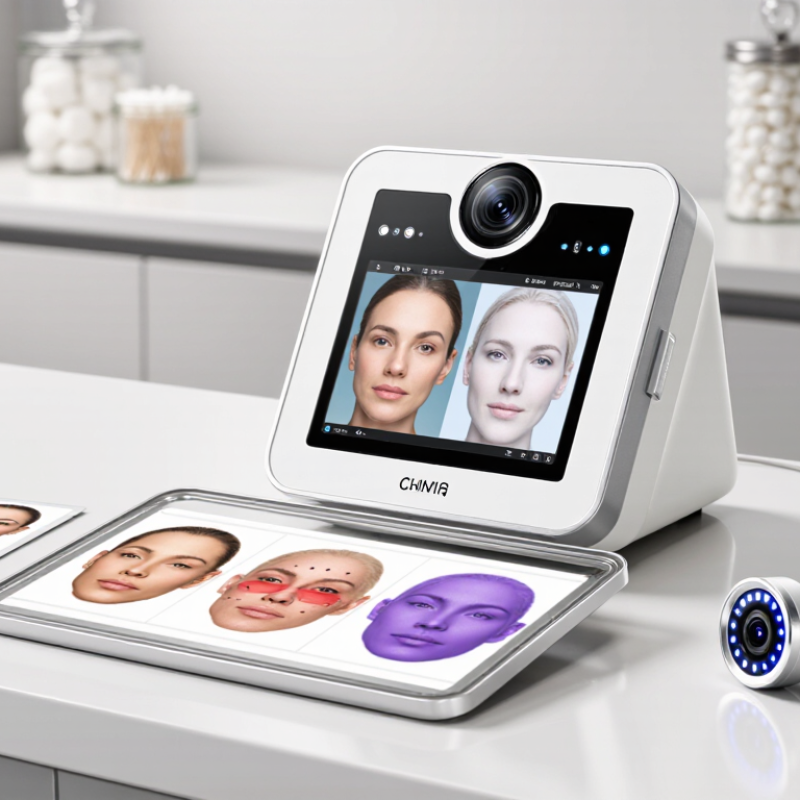
Define Core Imaging Standards: 3–5 Light Modes and ≥8 MP Resolution
When evaluating a China top skin analyzer, begin with its imaging standards, not its marketing language.
A practical system should provide three to five controlled light modes. These may include standard visible light, cross-polarized light, parallel-polarized light, and UV fluorescence where local regulations permit. Each mode reveals different details, such as redness, surface texture, oil distribution, or pigmentation patterns.
Resolution matters, too.
Choose at least 8 MP, preferably with a stable 4:3 sensor producing roughly 3264 × 2448 pixels. Higher resolution cannot repair poor optics, uneven illumination, or motion blur. I have seen impressive specifications produce weak images when the camera sits too far from the face. A fixed distance guide, consistent exposure, and color calibration card are more useful than inflated pixel numbers. Small details matter.
The World Health Organization reported that skin diseases affect approximately 1.8 billion people at any moment worldwide in its 2023 skin health assessment. IARC’s GLOBOCAN 2022 estimated 331,722 new melanoma cases globally.
These figures reinforce the need for reliable documentation, although a cosmetic analyzer is not a diagnostic device. Ask for repeatability testing, image uniformity data, and calibration records. A manufacturer should also explain how software handles different skin tones. That part is often underdeveloped. Personnel training remains essential, because even a sharp image can be interpreted poorly.
Assess Measurement Accuracy: ΔE00 ≤2.0 and Repeatability Within 5%
A China top skin analyzer should prove its measurement quality, not merely display impressive images. For color-related readings, look for a CIE ΔE00 accuracy of 2.0 or lower under controlled test conditions. Lower deviation means the device stays closer to a calibrated reference standard. However, the test method matters. Ask whether measurements used certified color tiles, stable lighting, and a defined skin-contact procedure.
Repeatability is equally important in daily practice.
The same area should be measured several times, with variation staying within 5%. A reliable evaluation repeats the scan after repositioning the probe, waiting briefly, and checking different skin zones. Results should remain comparable when the operator follows the same instructions. Small differences are normal. Large swings are not.
In hands-on assessments, I would also examine calibration reminders, sensor temperature control, and stored raw data. These details reveal whether the instrument supports professional judgment or only produces attractive numbers. A clear report should show units, reference ranges, and testing conditions. Be cautious with claims based on one small sample. I have seen readings change after cleansing, sweating, or pressing the sensor too firmly. That weakness deserves attention. Independent verification is still necessary before using the analyzer for consultations, research, or long-term skin tracking.
Verify AI Diagnostics Against Clinical Sets of 1,000+ Skin Images
A top skin analyzer should prove its AI diagnostics with more than polished demonstrations. Ask whether the system was tested against clinical sets containing 1,000 or more skin images. The dataset should include acne, pigmentation, redness, pores, wrinkles, and uneven texture. It should also represent different ages, skin tones, and lighting conditions. Otherwise, impressive accuracy may reflect a narrow testing environment.
Request clear validation details. Were images labeled by qualified dermatology professionals? Were difficult or borderline cases included? A reliable system should report sensitivity, specificity, and error rates for each concern. Overall accuracy alone can hide weak performance in darker skin tones or subtle conditions. Testing should use separate training and evaluation images. Reusing the same images may produce inflated results.
Look closely at the examination process. A dependable analyzer should guide camera distance, room lighting, and facial positioning. Consistent instructions make repeated scans more meaningful. I would compare several scans taken minutes apart. Results should remain reasonably stable. No model is flawless. Human review still matters, especially when irritation resembles pigmentation or temporary redness. The software should show how each result was generated, not only display a confidence score. Secure image handling, documented updates, and accessible technical support also reveal professional maturity. A product that admits uncertainty may deserve more trust than one promising perfect answers.
What Features to Look for in a China Top Skin Analyzer?
Verify AI diagnostics against clinical image sets containing 1,000+ images before evaluating accuracy, robustness, and real-world suitability.
Public dermatology datasets provide useful scale benchmarks: Derm7pt contains about 2,000 clinical and dermoscopic images, HAM10000 contains 10,015 dermatoscopic images, and the ISIC 2018 training set contains 25,331 skin-lesion images. A reliable skin analyzer should be tested on sufficiently large, diverse, and independently labeled clinical sets rather than small internal samples alone.
Reference datasets: Derm7pt, HAM10000, and ISIC 2018 training dataset.
Check Safety and Compliance: ISO 13485, IEC 60601, and CE/FDA Status
When evaluating a top skin analyzer from China, safety documents deserve more attention than camera resolution. A polished interface means little if electrical protection is uncertain. Ask the supplier for a current ISO 13485 certificate covering the actual manufacturer and device category. This standard reflects a controlled medical-device quality system, including production records, risk management, and corrective actions.
IEC 60601 evidence is equally important for powered diagnostic equipment. Check whether testing covers the complete analyzer, its power adapter, and included accessories. Review the test laboratory, report number, issue date, and model details. A document with a mismatched model name should raise questions. Small details matter.
CE status also requires careful reading. Confirm the applicable European conformity route, declaration of conformity, and notified-body information when required. FDA status needs similar caution. Registration is not the same as clearance, and a listing does not automatically prove clinical performance. Request the relevant 510(k) number when the product claims clearance. Then compare the authorized indications with your intended use.
In practice, I would inspect labels, user manuals, electrical markings, and software versions before placing an order. I would also request sample testing under normal clinic conditions. Skin images can change with room lighting, humidity, and camera distance. Compliance cannot correct poor image capture. No certificate replaces hands-on verification. I have seen impressive documentation fail to explain maintenance intervals or cybersecurity updates. That gap deserves an honest discussion before purchase.
Compare Workflow Metrics: Results in <60 Seconds with Cloud Data Security
A strong China top skin analyzer should produce readable results in under 60 seconds. That speed matters during busy consultations, where clients may wait beside the treatment chair. The workflow should guide image capture, check lighting, and flag poor positioning before analysis. Clear metrics can include hydration, oil balance, pore visibility, redness, texture, and pigmentation patterns. Numbers should support professional judgment, not replace it.
Cloud data security deserves equal attention. Look for encrypted transmission, controlled user permissions, secure storage, and detailed access logs. A reliable system should separate client profiles from unnecessary personal information. It should also support data deletion requests and configurable retention periods. Staff need practical training, because even strong technology can fail through careless account sharing. Test the recovery process, too.
Results are not perfect. Skin changes with lighting, cosmetics, temperature, and recent exercise. A scanner may show different readings after one hour outdoors. That is worth questioning. Operators should capture images under consistent conditions and explain measurement limits honestly. Reports should display scan time, device settings, and comparison trends. Cloud dashboards become more useful when they show progress across visits, rather than presenting one dramatic score. Independent validation, regular software updates, and transparent technical documentation can strengthen trust without overstating accuracy.
Conclusion
Choosing the right device requires more than attractive images or a modern interface. To understand what features to look for in a professional skin analyzer, begin with core imaging standards: at least three to five light modes and a resolution of 8 megapixels or higher can support clearer visualization of different skin conditions. Measurement accuracy is equally important, with a target color difference of ΔE00 ≤2.0 and repeatability within 5% to help ensure dependable results. AI diagnostic functions should also be validated against clinical datasets containing at least 1,000 diverse skin images, rather than relying only on general claims.
Safety, compliance, and daily efficiency should complete the evaluation. Look for evidence of ISO 13485 quality management, IEC 60601 safety compliance, and clearly documented CE or FDA status where applicable. A practical analyzer should deliver results in under 60 seconds, provide an intuitive workflow, and protect uploaded data through secure cloud storage and controlled access. Together, these criteria help professionals select a reliable, accurate, and efficient system.

 V-Cest Beauty