Why Choose Picosecond Laser Over Q Switched Nd YAG in 2026?

Time:2026-09-16 Author:Amelia
0%

In 2026, many patients are asking, “why choose picosecond laser over q switched nd yag?” Both technologies use short laser pulses to target selected pigment. However, their pulse durations and treatment responses differ. Picosecond devices release energy in trillionths of a second. This can create a strong photoacoustic effect with less surrounding heat. Q-switched Nd:YAG systems remain established, familiar, and clinically useful.

The choice should match the condition, skin type, pigment depth, and treatment history. Experienced practitioners may consider picosecond technology for resistant tattoos, uneven pigmentation, or patients seeking potentially fewer sessions. Some patients also report shorter visible downtime, although individual healing varies. Q-switched Nd:YAG may still perform well for specific lesions and established treatment protocols. Newer does not always mean better.

Evidence matters more than marketing claims. Treatment settings must be adjusted carefully, especially for darker skin tones. Excessive energy can increase the risk of burns, prolonged redness, or post-inflammatory hyperpigmentation. A qualified clinician should assess the skin under proper lighting, review medical history, and explain realistic outcomes. Eye protection is essential.

Small details matter.

A responsible comparison also includes cost, maintenance, operator experience, and aftercare access. Picosecond lasers can offer useful advantages, but they are not universal solutions. Some studies suggest improved pigment fragmentation, while long-term evidence remains limited for certain indications. Patients should ask for before-and-after examples, possible complications, and a clear treatment plan. The most reliable decision combines current evidence, clinical judgment, and honest discussion rather than device popularity.
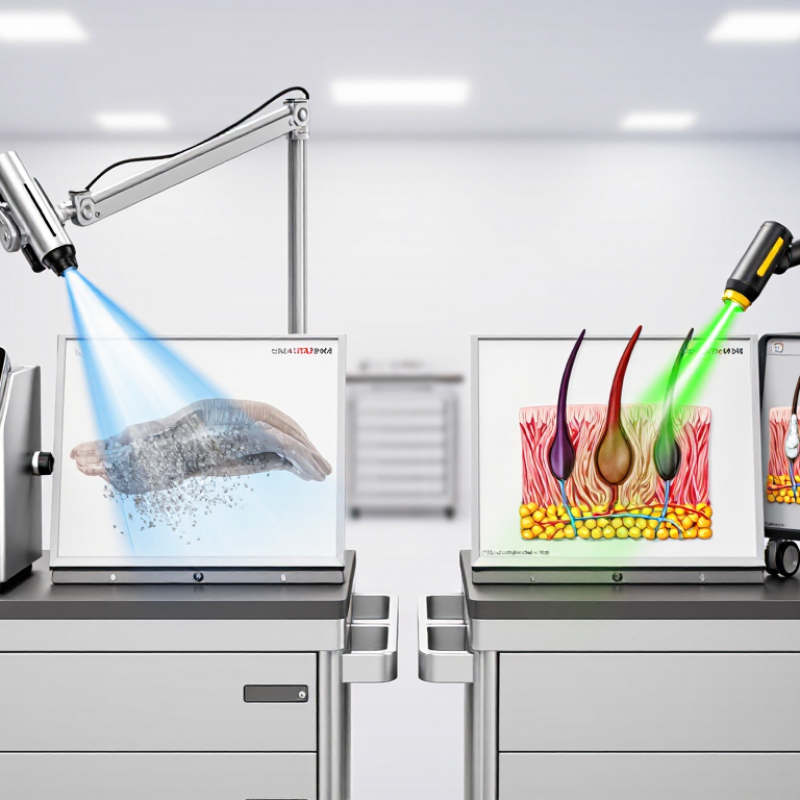
Why Choose Picosecond Laser Over Q Switched Nd YAG in 2026?

What Is a Picosecond Laser and How Does It Work?

Why Choose Picosecond Laser Over Q-Switched Nd:YAG in 2026?

What Is a Picosecond Laser and How Does It Work?

A picosecond laser delivers light pulses lasting trillionths of a second. One picosecond equals 0.000000000001 seconds. That is extremely brief. Its energy creates a strong photoacoustic effect, breaking pigment into smaller particles before substantial heat spreads through surrounding tissue. A 2024 review in Dermatologic Surgery describes picosecond pulse durations commonly ranging from 300 to 900 picoseconds, depending on the device and treatment setting.

Q-switched Nd:YAG systems usually deliver nanosecond pulses, lasting billionths of a second. They can produce effective photothermal and photoacoustic energy, but longer pulses may transfer more heat. Picosecond technology may therefore support faster pigment clearance and potentially reduce thermal stress in selected cases. Clinical outcomes still depend on wavelength, fluence, spot size, skin type, and operator skill. The 2023 International Society of Aesthetic Plastic Surgery report also shows continued global demand for energy-based aesthetic procedures, but it does not prove that newer pulse durations suit everyone.

The physics looks convincing. Real skin is less predictable. Darker skin tones, mixed pigment, and recent tanning require careful assessment. Published clinical reviews report favorable results, yet treatment protocols remain inconsistent across studies. More research is needed. A cautious consultation matters more than a fashionable specification.

How Q-Switched Nd:YAG Lasers Differ in Pulse Delivery

Why Choose Picosecond Laser Over Q Switched Nd YAG in 2026?

Pulse delivery explains much of the clinical difference. Q-switched Nd:YAG systems commonly release energy in nanosecond pulses, often around 5–20 nanoseconds. Picosecond platforms may deliver pulses below one nanosecond, frequently between 300 and 900 picoseconds. This shorter interval creates higher peak power without requiring the same total energy. A 2023 review in Lasers in Medical Science reported that shorter pulses can improve photoacoustic fragmentation of selected pigment particles while limiting surrounding thermal exposure.

The handpiece also changes the treatment experience. Q-switched delivery produces a sharp acoustic snap, followed by visible whitening or mild swelling. Picosecond delivery can create finer pressure waves, like tiny ripples striking compact pigment. However, pulse duration is not the whole story. Spot size, fluence, repetition rate, wavelength, and skin assessment still control outcomes. The American Society for Laser Medicine and Surgery emphasizes individualized parameters and documented safety procedures in clinical practice.

Not automatically better.

In real treatment rooms, picosecond devices may require fewer sessions for some resistant tattoos or pigmented lesions, but published results remain uneven. A 2024 systematic review in Dermatologic Surgery noted substantial variation in study design, patient skin types, and endpoint measurement. That limitation deserves attention. Shorter pulses can reduce heat, yet excessive fluence can still cause blistering, pigmentary change, or delayed healing. Experienced operators compare pulse delivery with tissue response, not marketing claims.

Key Differences in Pigment Removal and Skin Treatment Results

In 2026, patients often ask whether picosecond laser is better than Q-switched Nd:YAG. The answer depends on pigment depth, color, skin tone, and treatment goals. Picosecond devices deliver ultra-short pulses, creating strong photoacoustic impact with less reliance on heat. Q-switched Nd:YAG uses longer nanosecond pulses and remains useful for selected epidermal and dermal pigments. Results vary.

For superficial brown spots, picosecond treatment may fragment pigment into smaller particles, supporting gradual clearance. Some patients notice smoother texture because treatment may encourage collagen remodeling. This response is not guaranteed. Q-switched treatment can work efficiently on darker, well-defined lesions when wavelength selection matches the pigment. Several sessions may still be needed. Temporary redness, swelling, or darkening can occur. A darker skin tone needs careful energy adjustment.

Real-world follow-up shows that technique often matters as much as pulse duration. A qualified practitioner should examine the lesion, review medications, and consider a small test area. A changing or uncertain lesion needs medical assessment before laser. Eye protection is essential. Patients should not judge success after one session, because pigment may surface gradually over weeks. Early improvement can fade when aftercare is rushed. Not always. Conservative settings may be safer, although they can mean slower progress. The comparison is not perfectly simple; clearance, texture, downtime, and post-inflammatory color changes all deserve attention.

Why Choose Picosecond Laser Over Q-Switched Nd:YAG in 2026?

Key technical differences in pigment-focused skin treatment. Picosecond systems use substantially shorter pulses, which can favor photoacoustic pigment fragmentation and limit heat diffusion. Clinical results still depend on pigment depth, wavelength, skin type, treatment settings, and the indication.

Representative values: approximately 0.6 ns for a picosecond pulse and 7 ns for a Q-switched Nd:YAG pulse. Both platforms commonly use 532 nm and 1064 nm wavelengths for selected pigment indications. Shorter pulse duration does not guarantee faster clearance; assessment by a qualified clinician remains essential.

Safety, Side Effects, and Recovery Time Compared

When comparing picosecond laser with Q-switched Nd:YAG treatment in 2026, safety deserves more attention than speed. Picosecond pulses may reduce heat spreading around the target area. This can lower unwanted thermal injury for some patients. However, treatment settings, skin type, and pigment depth still matter greatly. No laser is perfectly gentle. Careful eye protection remains essential during every session.

Q-switched Nd:YAG treatment may cause temporary redness, swelling, or darkened pigment before fading. Picosecond treatment can produce similar effects, including pinpoint bleeding, crusting, tenderness, or short-term color changes. Darker skin tones may face a higher risk of post-inflammatory hyperpigmentation. A qualified practitioner should assess recent tanning, medications, scarring history, and active skin conditions. The comparison is not as neat as advertisements suggest.

Recovery is often brief, but “minimal downtime” does not mean no aftercare. Many people return to routine activities within one or two days after picosecond treatment. Q-switched treatment may need several days when stronger settings are used. The treated area can feel like fine sandpaper. That detail matters. Gentle cleansing, regular sunscreen, and avoiding heat or picking the skin can support healing. Results also vary, and more sessions may be needed than expected. A patch test can reveal sensitivity, although it cannot predict every reaction.

How to Choose the Right Laser for Specific Treatment Goals

Choosing between a picosecond laser and a Q-switched Nd:YAG laser starts with the treatment goal, not the newest technology. A picosecond system delivers extremely short pulses, which can fragment selected pigment into smaller particles. This may support faster clearance for some tattoos and resistant pigmentation. A Q-switched Nd:YAG system uses longer nanosecond pulses and remains useful for many pigmented lesions and tattoo colors.

Skin type matters greatly. Darker skin may face a higher risk of temporary darkening or lightening after treatment. A qualified clinician should assess pigment depth, color, medical history, and recent sun exposure. Wavelength selection also matters, especially when treating blue, green, red, or black tattoo ink. The safest setting is not always the strongest one.

Treatment comfort and recovery deserve honest discussion. Picosecond treatment may reduce heat exposure in certain cases, but swelling, redness, and incomplete clearance can still occur. Q-switched treatment may be effective, yet several sessions are commonly required. Results vary.

Some cases need patience.

Ask for realistic timelines, documented experience, and clear aftercare instructions. A small test area can reveal how your skin responds before broader treatment. Even then, outcomes are not guaranteed. Device performance depends on technique, calibration, skin response, and careful follow-up. Choosing the right laser means matching evidence and experience to your specific goal.

Why Choose Picosecond Laser Over Q-Switched Nd:YAG in 2026? — How to Choose the Right Laser for Specific Treatment Goals

Evidence-informed comparison of common treatment characteristics. Actual results depend on wavelength, fluence, spot size, skin type, lesion characteristics, and clinical technique.

Decision Dimension Picosecond Laser Q-Switched Nd:YAG Laser How to Choose for the Treatment Goal
Pulse Duration Typically in the picosecond range, commonly below 1 nanosecond. Typically in the nanosecond range, commonly around 5–100 nanoseconds depending on the device and setting. Choose picosecond technology when very short pulses and strong photoacoustic effects are desired.
Primary Tissue Effect Creates intense photoacoustic stress with comparatively less reliance on prolonged thermal heating. Uses selective photothermal and photoacoustic effects to fragment or heat targeted chromophores. Picosecond treatment may be preferable when the treatment plan prioritizes mechanical pigment disruption and reduced heat accumulation.
Common Wavelength Options Depending on the system, commonly available wavelengths include approximately 532 nm, 755 nm, and 1064 nm. Commonly uses 1064 nm and frequency-doubled 532 nm wavelengths. Choose the wavelength according to pigment color, depth, skin type, and the target chromophore—not pulse duration alone.
Black, Blue, and Dark Tattoo Pigment Often effective for difficult-to-clear pigment, particularly when short pulse duration and suitable wavelength selection are available. 1064 nm is widely used for black and dark blue pigment; multiple sessions are usually required. Picosecond may be advantageous for resistant or previously treated pigment, but Q-switched treatment remains a clinically established option.
Red, Orange, and Yellow Tattoo Pigment May address selected warm-color pigments when an appropriate shorter wavelength is available. 532 nm can target many red, orange, and some yellow pigments, but these wavelengths may carry a higher risk of epidermal irritation in susceptible skin. Choose based on the exact ink color and available wavelength. Test spots are particularly important for multicolor tattoos.
Post-Inflammatory Hyperpigmentation Potentially lower cumulative thermal exposure, although pigmentary changes can still occur. Effective for selected pigment conditions but thermal injury and inflammation may increase the risk of temporary hyperpigmentation. Neither option is risk-free. Use conservative parameters, strict sun protection, and careful assessment for darker skin types.
Melasma and Facial Dyschromia May be considered in selected cases, but recurrence and worsening pigmentation remain possible. Low-fluence approaches have been used for pigmentary disorders, but repeated treatment can cause rebound pigmentation or mottled hypopigmentation. Select cautiously. Diagnosis, trigger control, topical therapy, and sun protection are essential before choosing a laser.
Acne Scars and Skin Texture Some fractional picosecond systems use diffractive or focusing optics to create controlled dermal injury and stimulate remodeling. Standard Q-switched Nd:YAG treatment is primarily pigment-focused and is not generally the first choice for textural acne scars. Picosecond fractional treatment may be more suitable when texture improvement is a primary goal.
Expected Downtime Often includes temporary redness, swelling, pinpoint crusting, or darkening of treated pigment. Downtime varies by settings and treatment area. Common effects include redness, swelling, whitening of the treated area, crusting, or blistering when higher fluence is used. For minimal downtime, choose conservative settings and a treatment protocol matched to the lesion; the device category alone does not determine recovery time.
Number of Sessions Usually requires multiple sessions for tattoo removal or pigment concerns; the exact number varies widely. Also usually requires multiple sessions, often spaced several weeks apart to allow pigment clearance and skin recovery. Do not choose solely by session count. Treatment response depends on pigment depth, ink density, immune clearance, and previous treatments.
Large or Dense Tattoos May provide efficient pigment fragmentation, but treatment area, fluence, and safety limits still determine session duration. Can treat large areas, but heat and tissue response must be managed carefully, especially at higher fluence. Choose the platform with suitable spot sizes, cooling, pulse control, and a clinician experienced in staged treatment.
Dark Skin Phototypes Shorter pulse duration may help limit unwanted thermal exposure, but post-inflammatory hyperpigmentation remains possible. Longer-wavelength 1064 nm is generally preferred over shorter wavelengths when treating darker skin, although risk is not eliminated. Prioritize safety over speed. Use appropriate wavelength selection, conservative fluence, test spots, and strict aftercare.
Precision and Selectivity Can deliver high peak power in very short pulses, supporting precise targeting of small pigment particles. Provides established selective targeting with a broader history of clinical use for tattoo and pigment treatment. Picosecond may be preferred for precision-focused treatment, while Q-switched Nd:YAG remains appropriate when proven wavelength options and clinical familiarity are priorities.
Best-Fit Treatment Profile Resistant tattoos, selected benign pigment concerns, and some fractional texture treatments where short pulses are beneficial. Established treatment of black or dark tattoo pigment, selected vascular or pigment targets, and cases where 1064 nm or 532 nm is appropriate. Match the laser to the diagnosis, target color and depth, skin type, desired downtime, and clinician expertise.
Key Limitation Higher purchase and operating costs may affect treatment availability; newer technology does not guarantee superior results for every condition. May require more sessions for some resistant pigments and can produce more cumulative thermal effects at aggressive settings. The best choice is treatment-specific. A well-selected Q-switched Nd:YAG laser may outperform an unsuitable picosecond setup, and vice versa.

Clinical note: Laser treatment should be selected and performed by a qualified medical professional after diagnosis, skin-type assessment, medication review, and—when appropriate—a test spot. The figures and ranges above are general technical descriptions rather than treatment prescriptions.

FAQS

Is a picosecond laser always safer than a nanosecond laser?

Not always. Shorter pulses may reduce heat spread, but skin type, pigment depth, and settings still affect safety. No laser is perfectly gentle.

What side effects can occur after laser treatment?

Redness, swelling, tenderness, crusting, or temporary color changes may appear. Tiny pinpoint bleeding can happen. Darker skin may develop temporary hyperpigmentation.

How long does recovery usually take?

Many people resume normal activities within one or two days. Stronger treatments may require several days. The skin may feel like fine sandpaper.

What aftercare helps the treated area heal?

Cleanse gently and use sunscreen regularly. Avoid heat, harsh products, and picking the skin. Small details matter during healing.

How should I choose between short-pulse and nanosecond treatment?

Start with your treatment goal, not the newest technology. Short-pulse treatment may fragment some pigment more efficiently. Nanosecond treatment remains useful for many pigment concerns.

Does skin tone affect laser treatment decisions?

Yes. Darker skin may face higher risks of temporary darkening or lightening. A qualified clinician should review sun exposure, medical history, and scarring history.

Can a patch test guarantee a safe full treatment?

No. A patch test may show sensitivity, but it cannot predict every reaction. That limitation deserves honest discussion.

Will one laser session remove all unwanted pigment?

Usually, several sessions may be needed. Results depend on pigment color, depth, technique, and skin response. Complete clearance is not guaranteed.

Is eye protection necessary during every session?

Yes. Proper eye protection remains essential for every laser procedure. The treated area can be small, but the safety risk is not.

What should I ask before treatment?

Ask about realistic timelines, settings, aftercare, and documented experience. Request a small test area when appropriate. The strongest setting is not always the wisest choice.

Conclusion

In 2026, understanding why choose picosecond laser over q switched nd yag depends on how each technology delivers energy and matches a patient’s treatment goals. Picosecond lasers release ultra-short pulses that create a photoacoustic effect, breaking pigment into very small particles while limiting heat exposure to surrounding tissue. Q-switched Nd:YAG lasers use longer nanosecond pulses and remain effective for many pigmentation concerns, but their thermal impact and treatment response can differ. These distinctions may influence results for tattoos, freckles, sun-related pigmentation, and selected skin rejuvenation treatments.

Picosecond treatment may offer faster pigment clearance, fewer sessions in some cases, and potentially shorter recovery, although outcomes vary according to skin type, pigment depth, treatment area, and individual healing. Both options can cause temporary redness, swelling, sensitivity, or changes in pigmentation, so professional assessment is essential. The best choice should be based on the target condition, desired results, safety considerations, medical history, and realistic expectations rather than pulse duration alone.

Amelia

Amelia

Amelia is a seasoned marketing professional with a wealth of expertise in our company’s core offerings. With an unwavering passion for driving growth and innovation, she plays a pivotal role in shaping our marketing strategies and enhancing brand visibility. A key aspect of her responsibilities......